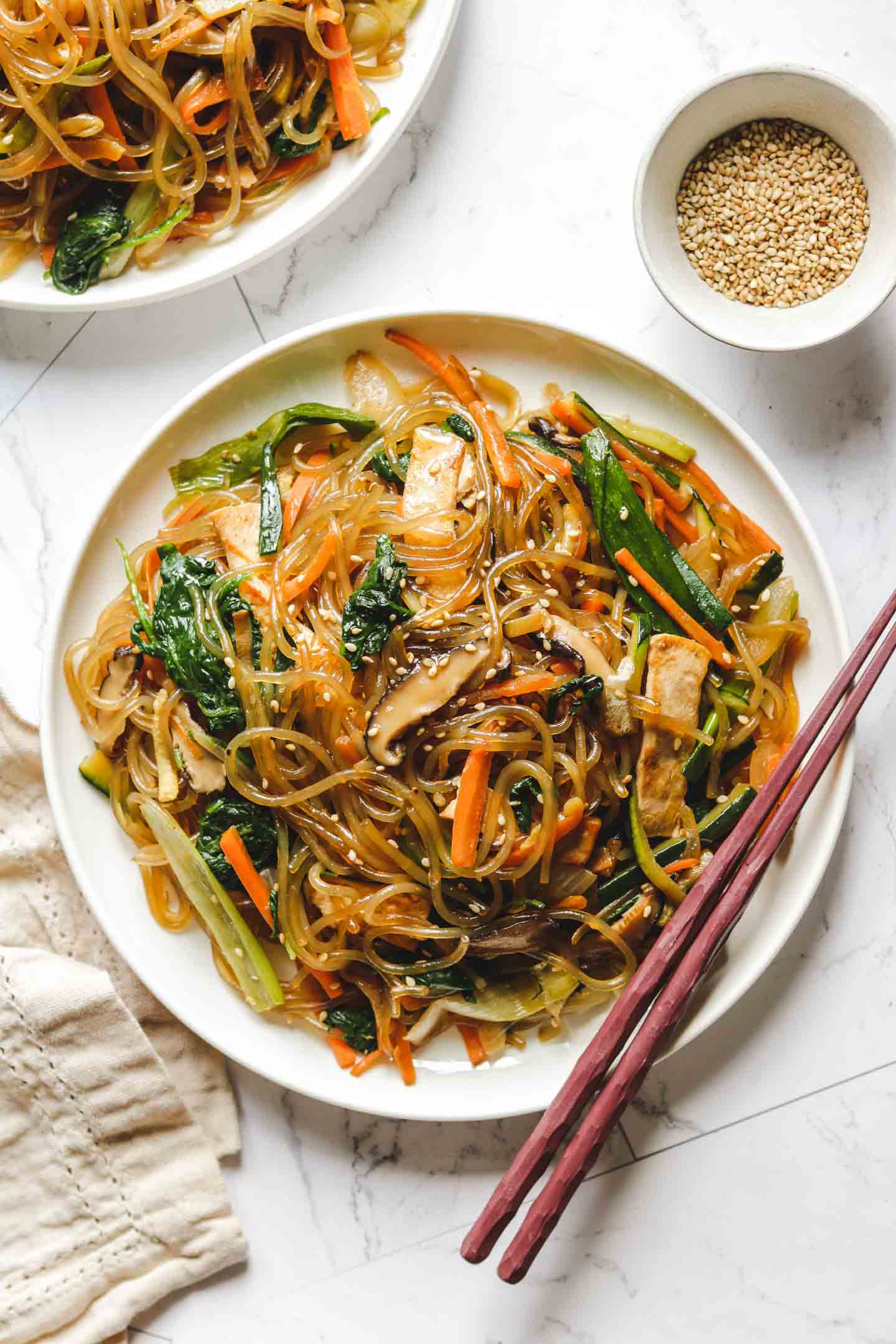
Experience the Delight of Vegetarian Japchae: Sweet Potato Noodles & Colorful Veggies Recipe
Step into the vibrant world of Korean cuisine with a dish that has captivated palates for centuries: Japchae. This beloved staple, traditionally a medley of stir-fried vegetables and glass noodles, takes on a fresh, plant-based twist in our Easy Vegetarian Japchae: Your Guide to Delicious Korean Glass Noodles recipe. Imagine bouncy, translucent sweet potato noodles intertwined with a kaleidoscope of crisp, tender vegetables, all coated in an irresistible sweet and savory sauce. Our focus today is on crafting a delightful vegetarian japchae korean glass noodles dish that's not only incredibly flavorful but also remarkably satisfying.
Whether you're a long-time fan of Korean food or new to its exciting flavors, vegetarian Japchae offers an accessible and delicious entry point. It’s a versatile dish, perfect as a substantial side, a light main, or a fantastic addition to any celebration spread, from Lunar New Year feasts to everyday healthy meal prep. Forget any intimidation about making Korean food at home; this recipe proves that authentic, mouth-watering flavors are well within your reach.
What is Japchae? A Culinary Journey Through Korean History
At its heart, Japchae (잡채), literally meaning "mixed vegetables," is one of Korea’s most iconic noodle stir-fries, standing proudly alongside household names like kimchi and bulgogi. But its journey began far from the everyday kitchen. Tracing its origins back to the 17th century Joseon Dynasty, Japchae was initially an exclusive delicacy served to members of the royal court. It was a dish of status and sophistication, highlighting the freshest seasonal produce and culinary artistry.
Over time, Japchae transitioned from royal tables to the common people's kitchens, becoming a celebratory dish synonymous with special occasions like weddings, birthdays, and national holidays. This historical context adds a rich layer of appreciation to every bite, reminding us of the enduring legacy of Korean culinary traditions. The non-vegetarian versions often incorporate seasoned beef, pork, or chicken, but the essence of the dish remains its vibrant mix of textures and the unique chewiness of its signature noodles.
The star of any Japchae, and particularly our vegetarian japchae korean glass noodles recipe, is From Royal Courts to Your Table: Authentic Vegetarian Japchae Recipe. These distinctive noodles, known as dangmyeon (당면), are crafted from sweet potato starch. Their translucent, almost glass-like appearance gives them their common English name, "glass noodles." Beyond their visual appeal, dangmyeon possess a uniquely bouncy and chewy texture that absorbs flavors beautifully, making them an ideal canvas for the rich, umami sauce.
The Magic of Vegetarian Japchae: Ingredients & Flavor Profile
Crafting a truly memorable vegetarian japchae korean glass noodles dish hinges on a harmonious blend of simple, yet impactful ingredients. The beauty lies in their collective contribution to both texture and taste:
- Dangmyeon (Sweet Potato Starch Noodles): As discussed, these are non-negotiable. Their unique chewiness is foundational to Japchae's appeal. They are also naturally gluten-free, making this dish accessible to more dietary needs.
- A Rainbow of Vegetables: This is where Japchae truly shines. A classic mix often includes:
- Carrots: Julienne-cut for a touch of sweetness and crunch.
- Onion: Adds aromatic depth and a subtle sweetness when stir-fried.
- Red Bell Peppers: For vibrant color, a crisp texture, and mild sweetness.
- Baby Spinach: Wilted just enough to add a soft, earthy element.
- Shiitake Mushrooms: These bring a robust, umami-rich flavor and a meaty texture, often standing in for traditional meat components in vegetarian versions. Wood ear mushrooms are another excellent traditional option if available.
- Eggs: While many traditional vegetarian versions omit meat, egg ribbons are often included to provide a satisfying, tender protein element. They add a beautiful visual contrast and a delicate texture that complements the noodles and vegetables perfectly. If you're aiming for a fully vegan version, simply omit the eggs or substitute with pan-fried tofu or tempeh strips.
- The Signature Sauce: This is the soul of Japchae, bringing all the elements together. Typically a blend of:
- Soy Sauce: Provides the foundational savory, umami flavor.
- Sesame Oil: Essential for its nutty aroma and deep, rich taste.
- Sugar or Sweetener: Balances the savory notes and adds a touch of classic Korean sweetness.
- Minced Garlic: For an aromatic punch.
The resulting flavor profile is a symphony of sweet and savory, with a subtle nutty undertone from the sesame oil. Each bite offers a delightful textural contrast – the bouncy noodles, the crisp bell peppers, the tender spinach, and the chewy mushrooms – making it an incredibly engaging eating experience.
Crafting Your Own Vegetarian Japchae: Tips for Success
While Japchae might seem like a complex dish, making delicious vegetarian japchae korean glass noodles at home is surprisingly straightforward with a few key techniques. The beauty lies in preparing each component separately and then tossing them together.
Sourcing Your Dangmyeon
The most unique ingredient you'll need to seek out is dangmyeon. Your local Asian grocery store is the best place to find them, often in the noodle aisle. Online retailers are also a reliable source. Don't worry if you're new to Asian markets; these noodles are quite common.
Preparing the Noodles: Soaking vs. Boiling
While some recipes suggest boiling dangmyeon, a fantastic method, popularized by culinary figures like Maangchi, involves simply soaking them in cold water for about 30-40 minutes. This gentle hydration technique ensures the noodles become perfectly pliable without overcooking, maintaining their desirable bouncy chewiness when stir-fried later. During this soaking time, you can efficiently prepare all your vegetables, saving time and streamlining the cooking process.
The Art of Stir-Frying Vegetables
To ensure each vegetable maintains its distinct texture and flavor, it's best to stir-fry them individually or in small batches. This prevents overcrowding the pan, which can lead to steaming instead of proper stir-frying. Season each batch lightly with a pinch of salt as you cook them. Aim for tender-crisp vegetables – not too soft, not too raw.
Achieving the Perfect Sauce Balance
The sauce is crucial. Whisk all the sauce ingredients together until the sugar is fully dissolved. Taste and adjust to your preference – a little more soy for savoriness, more sugar for sweetness, or a dash more sesame oil for nuttiness. Remember, the noodles and vegetables will absorb this flavor, so a robust sauce is key.
Tossing It All Together
The final step is the most rewarding: combining everything. Once the noodles are cooked (or soaked and then briefly stir-fried or boiled) and the vegetables are ready, gently toss them all together with the sauce. Use tongs to ensure the sauce evenly coats every strand of noodle and every piece of vegetable. This is where the magic happens, and the individual components meld into a harmonious whole.
Why Vegetarian Japchae is More Than Just a Dish
Beyond its incredible taste, vegetarian japchae korean glass noodles offers a myriad of reasons to become a regular in your culinary rotation:
- Healthy & Wholesome: Packed with fresh vegetables and made with gluten-free sweet potato noodles, it's a naturally nutritious meal. It's a great way to boost your vegetable intake.
- Customizable: Feel free to experiment with different vegetables based on seasonal availability or personal preference. Broccoli florets, snap peas, bell peppers of different colors, or even kale can be excellent additions. For a vegan version, simply omit the eggs and ensure your sauce is vegan-friendly.
- Crowd-Pleaser: Its vibrant appearance and universally appealing sweet and savory flavor profile make it a hit with families and guests alike. It's often devoured quickly at potlucks and gatherings.
- Meal Prep Friendly: Japchae holds up beautifully in the refrigerator for several days, making it an ideal choice for healthy meal prep. The flavors often deepen overnight, making leftovers even more delicious.
- Cultural Connection: Preparing Japchae is also a wonderful way to connect with Korean culinary traditions and explore new flavors from around the world.
Whether you're seeking a festive dish for a special occasion or a flavorful, wholesome meal for a weeknight dinner, vegetarian Japchae delivers on all fronts. Its rich history, delightful textures, and balanced flavors make it a truly special culinary experience.
Conclusion
From the royal courts of the Joseon Dynasty to your very own kitchen, Japchae continues to be a dish that brings joy and flavor. This comprehensive guide to making vegetarian japchae korean glass noodles empowers you to recreate this iconic Korean favorite with confidence. Embrace the unique chew of dangmyeon, the freshness of colorful vegetables, and the irresistible sweet and savory sauce. It's a dish that's not only delicious and versatile but also a celebration of culture and wholesome eating. So, gather your ingredients, follow these tips, and prepare to delight your senses with a truly extraordinary meal.
